Design strategy for an award winning, certified B2B enterprise platform, for a seamless end-to-end product experience (BD, onboarding, training, delivery, consulting, CS, internal)
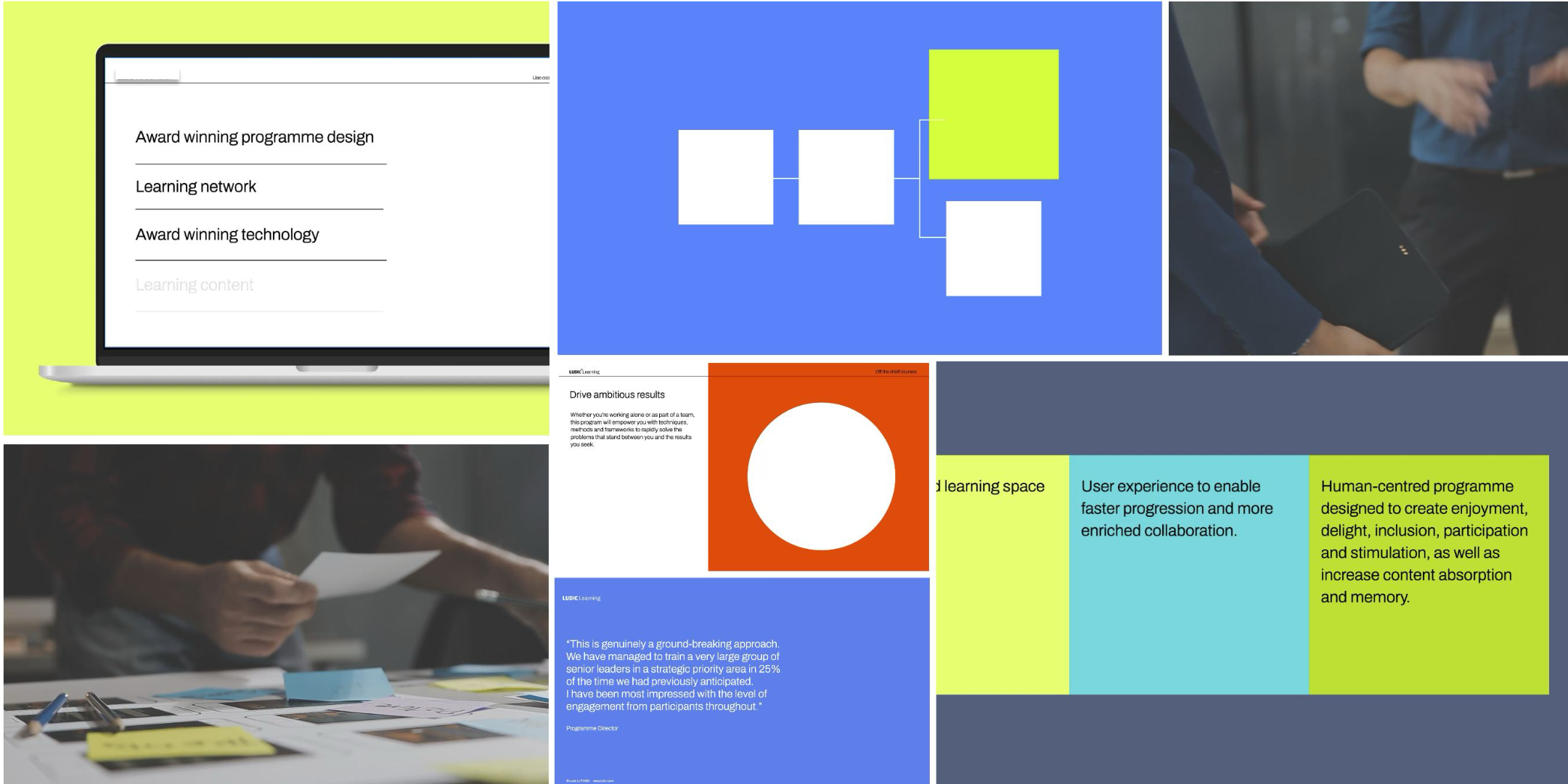
A digital experience platform built around client needs from the outset, enabling complex enterprise organisational transformation, events engagement and learning programs - a tool for the digital architecture for behavioural change. The produce had historically been modular, and embedded in a service offering portfolio.
The product had been designed one client programme at a time. By now the experience was poorly joined up, fragmented, unintuitive, bumpy, lacking an enterprise B2B tone. Functions were difficult to find or understand, navigation inconsistent, and adoption was low due to overwhelm of options, and an array of different X. Joined up tech created uncomfortable bumps and changes in design and experience. Onboarding and training felt like different brand / products experiences.
My role was to
Provide a pragmatic, actionable strategy towards:
seamless experience across the entire product brand from before and after product - marketing, BD, onboarding, training, engagement etc
built psychological safety and trust
empowering the product to evolve and mature towards a stand-alone entity
retaining master brand trust and recognition.
Set the visual identity and design design language framework, without alienating or starting from scratch. Handoff to a design team of two.
Design the organisational shift to empower BD and CS teams to present the product suite as a stand-alone product, brand and experience.
Discovery phase identified three main problem nodes
-
A product born out of a service offering meant product identity fell within the masterbrand, reinforced by programme delivery, BC, CS and business consultants.
Typical attributes of identity were diluted, value and trust was promoted at master brand level but not echoed in product experience. Trust was not baked in to the product design.
White labelling reinforced this.
———————
Innovative techniques were integral to the master brand service model, the native UI was treated playfully, as favoured by delivery teams.
This created UX challenges on a foundational level and this needed to be matured to a B2B enterprise SAAS/PAAS X.
-
Concurrent development and hard sales drives behind the expansion on the product + including a mobile app took priority. The core platform was not updating as rapidly, creating disconnected experiences, aging the platform, and de-prioritising existing clients.
-
A business model and Agile approach that had shifted decision-making to BD and CS teams, short term client-driven solutions resulted in a disjointed, fragmented experience / design.
A product born out of a service offering meant design ownership lay with programme delivery, BC, CS and business consultants.
The design function responded to directives based on non-product decision-making on short term programme needs.
The solutions
-
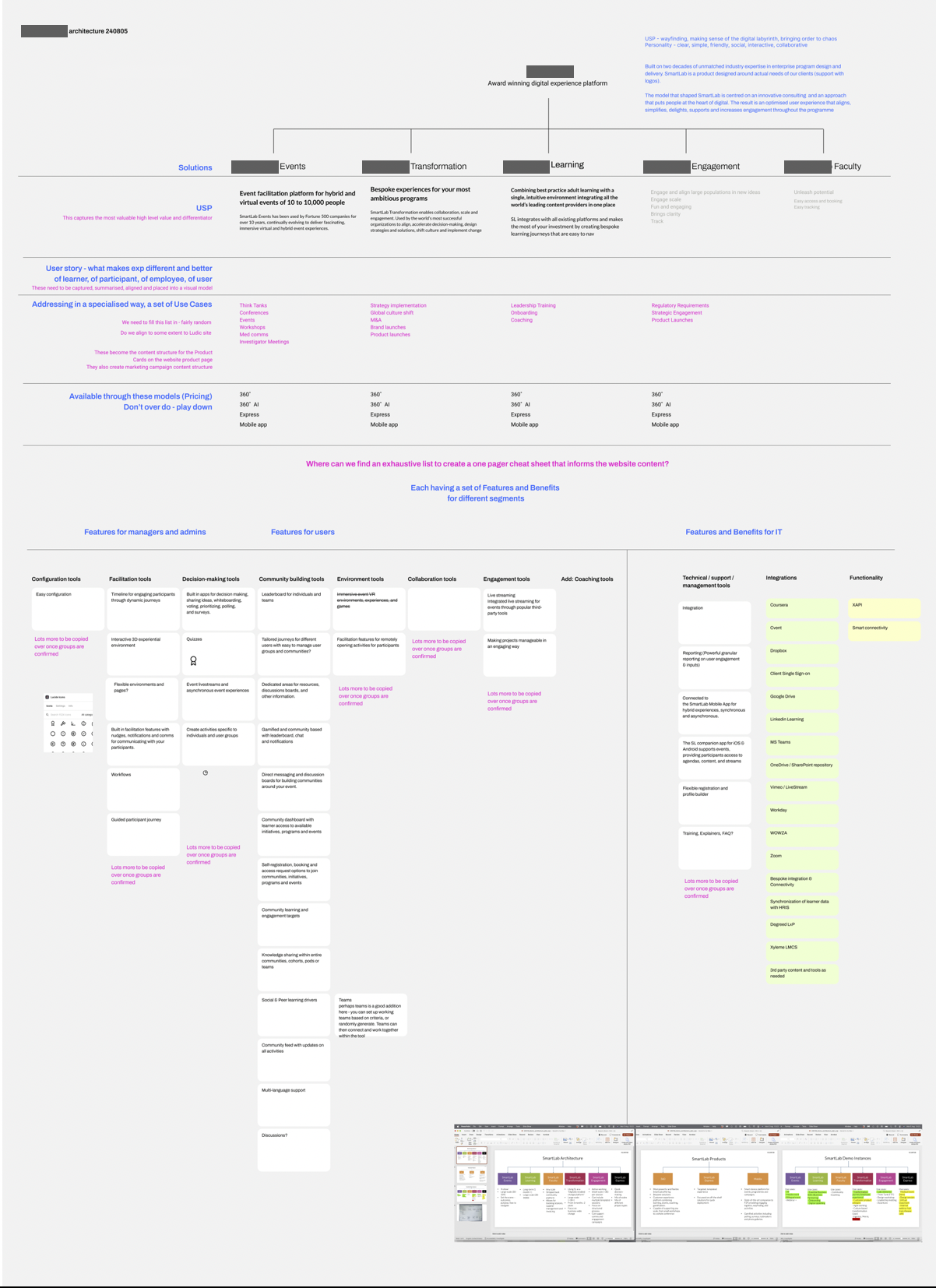
Developed a new product identity
Balancing equity of masterbrand and new stand alone ID characteristics. Worked in collaboration with product designers.
Recalibrate internal and external ideas, understanding and beliefs.
Business model canvas
Brand strategy
Proposition framework
Product architecture
Naming
Brand identity
Product design principles
Interactivity
Image / video library principles
White labelling principles
Brand book
-
Place the design function at the heart of decision-making.
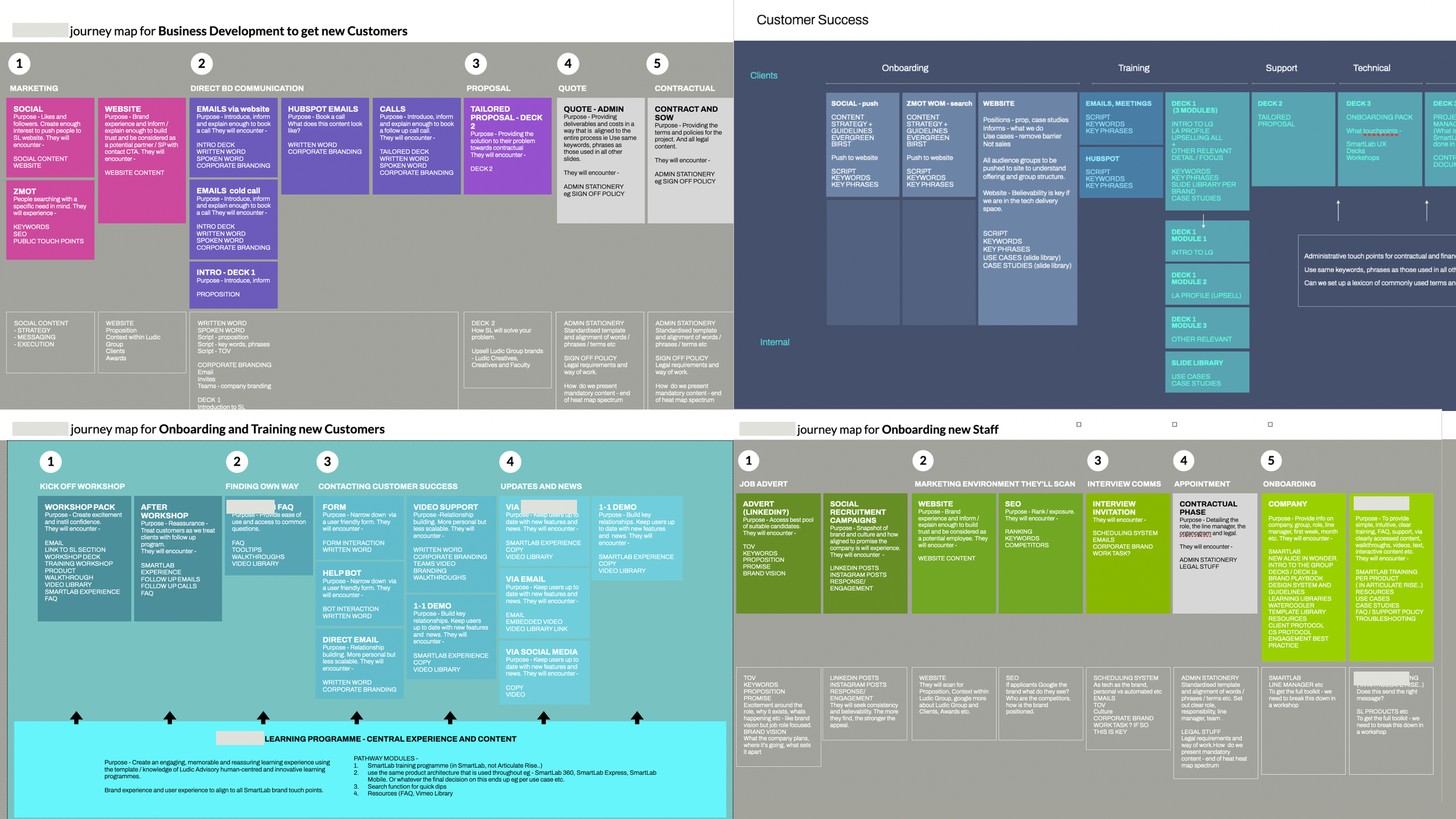
We mapped journeys across marketing, BD, onboarding and retention, customer success, new staff onboarding and training.
This gave us the ground plan from which we designed a refreshed design decision-making process, shifting the design function from a responsive role to a central and leading one.
This relied on external inputs and approvals (upstream and downstream) and risked creating a silo or an empire, mitigated by the alignment / common understanding of the role and commercial value of design.
This also meant direct contact with business owners on key decision-making removing complexity of BD, CS, Delivery inputs, shifting the rank and role of design leadership.
This process involved a change management and culture shift programme to be implemented across the company.
-
Roadmap identifying priorities and detailing their resolve
Phase 1:
Plug product X into brand X, create a full experience.
What is the new product brand, what principles govern its experience.
Define how experiences are connected across the platform using brand XD + UXD strategies and principles.
Next phases would address UX within functions, per user group.